

When the days get short and the temperature drops, it can become easier to spend your days on the couch rather than on the go. Evening walks can feel less appealing, outdoor plans get canceled, and suddenly, you realize you’ve barely moved all day. It happens to almost everyone once winter settles in.
Staying active in the colder months takes a little more planning, but it’s absolutely doable. Pairing movement with other healthy habits, from good sleep to supporting your cells with something like C15, helps you feel your best until spring. Here’s how to keep moving when the weather makes you want to hibernate.
Why Do We Move Less When It’s Cold?
Several things work against you at once. Shorter days mean less daylight for walking, running errands on foot, or getting outside after work. Cold, icy, or rainy weather can make outdoor exercise feel uncomfortable and sometimes unsafe.
Lower energy also plays a role. Many people feel more sluggish in winter, and cozy indoor activities often become a lot more tempting. Without intention, those small choices add up to long stretches of sitting.
How Much Activity Do Adults Actually Need?
The baseline is clearer than many people realize. Adults need 150 minutes of moderate-intensity physical activity and two days of muscle-strengthening activity each week.
That might sound like a lot, but it breaks down to about 30 minutes a day, five days a week. Moderate activity simply means something that gets your heart rate up, like brisk walking, dancing, or cycling.
Does Sitting Less Matter on Its Own?
Yes, and that’s encouraging news for anyone starting from zero. Health experts emphasize that even light-intensity activity can offset some of the risks of being sedentary.
In other words, you don’t have to jump straight into intense workouts. Simply standing up more often, stretching, and breaking up long sitting sessions counts. Taking a brisk five- or 10-minute walk a few times a day adds up quickly.
Can Short Bursts of Movement Really Count?
They can. Even very short movement breaks can benefit your body. Research has found that walking for as little as two to five minutes after a meal can help lower blood sugar compared with staying seated.
That makes post-dinner walks around the house, quick laps during commercial breaks, or a few flights of stairs worthwhile. Small bursts are especially helpful in winter, when longer outdoor workouts are harder to fit in.
What Can You Do Indoors?
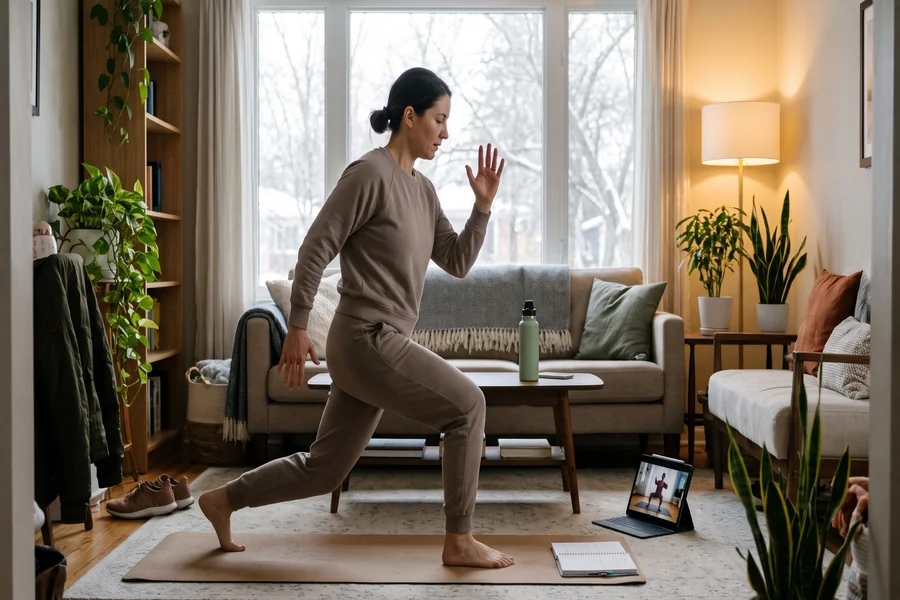
Bodyweight exercises such as squats, lunges, push-ups, and planks require no equipment and can build strength. Online workout videos make it easy to try yoga, dance, Pilates, or high-intensity routines from your living room.
If you have stairs, use them. Walking laps around a mall or big-box store is another popular winter option, offering a warm, dry space to rack up steps. Indoor pools, climbing gyms, and fitness classes add variety when you’re craving something new.
How Can You Stay Active Outside Safely?
Cold doesn’t have to mean staying indoors entirely. Dress in layers that you can remove as you warm up, and cover your hands, head, and ears.
Choose shoes with good traction for icy sidewalks, and wear bright or reflective clothing if you’re out during darker hours. Warming up a bit longer than usual helps your muscles adjust to the cold before you pick up the pace.
How Do You Build Movement Into a Workday?
For people who sit at a desk, winter can mean entire days spent in one chair. Set a timer to stand and stretch every hour, or take phone calls while walking around.
A standing desk or a simple desk converter makes it easier to change positions. Walking to a coworker’s desk rather than sending a message, or taking a few laps during breaks, sneaks in extra movement without much effort.
Does Making It Social Help?
Exercising with others makes it more fun and adds accountability, which is especially helpful when motivation dips. Join a class, find a walking buddy, or start a friendly step challenge with family or coworkers. Having someone counting on you makes it much harder to skip a workout on a dreary day.
How Do Sleep and Nutrition Fit In?
Energy for movement starts with taking care of the basics. Consistent sleep helps you feel rested enough to stay active, while balanced meals give your body steady fuel.
Winter often brings comfort-food cravings and disrupted routines. Maintaining a regular sleep schedule and prioritizing nutritious meals make it easier to sustain the habits that keep you moving.
Keep Moving Through the Cold
Staying active in winter doesn’t require a gym membership or perfect weather. Small, consistent choices like short walks, indoor workouts, and fewer long stretches of sitting make a meaningful difference.
Pick a couple of strategies that fit your routine and build from there. Movement in the colder months helps your body and your mood, setting you up to feel strong and energized when spring finally arrives.