

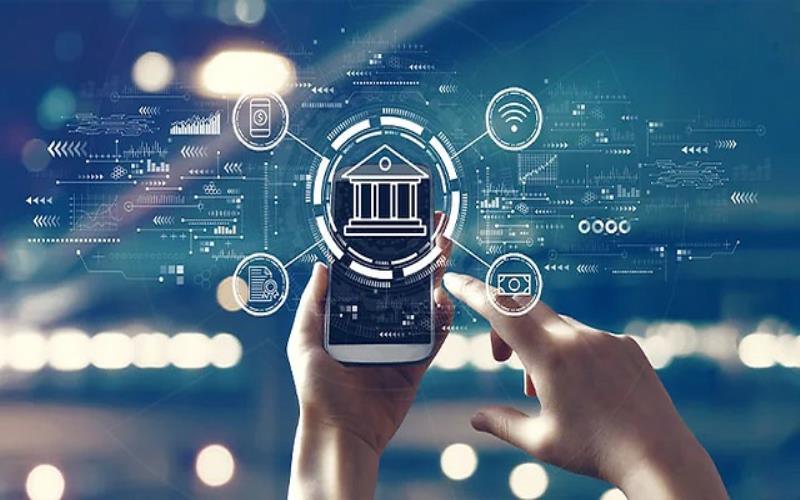
The rise of neobanks and fintech firms has signaled that financial services no longer belong solely to long-established banks. These companies use advanced technology to provide innovative solutions that simplify banking better and faster for customers.
The benefits of these digital solutions include automation, improved analytics, increased security, and personalized customer service.
FinTech Lending
FinTech lending is transforming the way people manage their money. It’s helping consumers fill financial gaps, buy homes, and save on fees by lowering interest rates.
Fintech lenders have fueled their rapid growth by expanding access to credit to new consumers, lowering consumer fees, and providing more convenient lending procedures. FinTech lenders are also attracting investors by reducing default risk.
A recent Finance and Economics Discussion Series study finds that strategic partnerships between FinTech lenders and specialist banks target marginal-risk, near-prime, and low-prime consumers for personal loans. These partnerships capitalize on federal preemption of state rate ceilings while avoiding competition from consumer finance companies, the primary source of personal loans for higher-risk consumers.
Despite this expansion, FinTech lending still represents a small share of overall credit. The findings show that FinTech lenders rely too heavily on credit scores to determine loan pricing, and this overreliance leads to economically significant cross-subsidization and mispricing. It also exacerbates the risk-reward tradeoff necessary for promoting financial inclusion and maintaining stable credit markets.
FinTech Analytics
Almost every click and swipe on Fintech platforms weaves a new thread in the tapestry of data. Fintech analytics is a discipline that helps analyze complex information and provide actionable insights for business.
Moreover, it allows companies to deliver a better overall customer experience by increasing the efficiency of processes and reducing costs. This is achieved by leveraging artificial intelligence and other advanced technologies.
In financial apps, many options exist, such as Current, offering various features and benefits tailored to diverse user needs and preferences.
As customers become savvier and more demanding, FinTech is growing in popularity because of its ability to offer new solutions to old problems. Peer-to-peer lending platforms, budgeting apps, and robo-advisors are FinTech innovations that have made financial products and services more accessible and affordable to consumers.
Using tools to create real-time customer behavior models and predictive analysis allows FinTech companies to increase cross-sales, improve product development, and enhance the customer experience. It also allows monitoring offline process metrics to promptly anticipate and respond to changes.
FinTech Payments
Amid a global trend toward greater digital integration, FinTech is reshaping the world of payments and financing. Customers now expect real-time payment options and the ability to finance purchases with instant credit or digital currencies.
Fintech innovators know that proving their value to consumers is critical for winning their trust and loyalty. They also understand that providing a seamless experience optimizes their customer journey.
For legacy financial institutions, this dynamic shift means embracing new technology and changing business models to keep pace. It also requires partnering with providers offering various services, including payment methods, embedded finance, and instant cross-border payments.
FinTech Security
In the banking sector, FinTech is revolutionizing security and financing. Innovative technologies such as tokenization, biometric authentication, and layered risk scoring are helping to increase safety and reduce fraud risks. These capabilities are used to verify identity, validate e-documentation, and assess transactional behaviors more effectively than relying on a single factor, such as passwords or PINs.
These advances have also made it easier for banks to provide new services to customers. For example, companies offer free banking services and features that help consumers avoid overdraft fees and other charges. At the same time, some provide automated savings tools and a centralized view of financial health. Others offer cost-effective money transfer services to consumers worldwide.
As these trends evolve, FinTech companies will play a significant role in helping consumers manage their finances and improve the customer experience. However, financial institutions that embrace these technologies thoughtfully must consider the impact on cybersecurity and ensure robust security measures are in place.